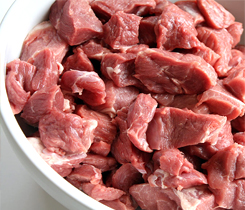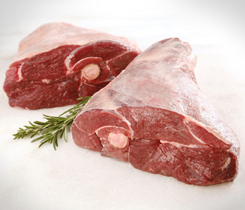
Mutton

  • STRENGTH IN MUTTON

    Mutton, the meat from adult sheep, provides a more gamey alternative to standard beef or pork. You can use mutton as you would use pork or beef, and some options are mutton stew and roast mutton. The meat is rich in a variety of minerals and vitamins, but

    it contains more fat than very lean cuts of beef. In moderation, mutton can be a beneficial component in an overall healthy diet.


    MINERALS IN MUTTON

    Each serving of mutton provides 4 milligrams of iron, or 22 percent of the daily value. Iron is necessary for healthy red blood cells and preventing anemia, and the iron from meat is in the form of heme iron, which is easy for your body to absorb. Zinc is a mineral that promotes a strong immune system,

    and a 3-ounce serving of mutton supplies 5 milligrams of zinc, or 33 percent of the daily value. A 3-ounce portion of mutton provides 348 milligrams of potassium and 115 milligrams of sodium. Potassium helps counter the effects of sodium, and a high-potassium, low-sodium diet helps lower your blood pressure

  • VITAMINS IN MUTTON

    A three-ounce portion of cooked mutton supplies 3.8 micrograms of vitamin B-12, or 32 percent of the daily value. Vitamin B-12 is an essential nutrient for producing healthy red blood cells, according to the Linus Pauling Institute Micronutrient Information Center.

    Older adults are at higher risk for deficiency. Each serving of mutton contains 5.5 milligrams of niacin, or vitamin B-3, or 28 percent of the daily value. Niacin is necessary for metabolizing carbohydrate, fat and protein from your diet. An 85-gram, or 3-ounce, serving of roasted mutton contains 199 calories and no carbohydrates. Mutton provides 28 grams of protein, or 56 percent of the daily value, in each 3-ounce serving. Protein is essential for maintaining your muscle mass and building a strong immune system. A 3-ounce serving of mutton also contains 9 grams of total fat, or 14 percent of the daily value, and has 93 milligrams of cholesterol, or 31 percent of the daily value. Dietary cholesterol may raise your blood cholesterol levels.